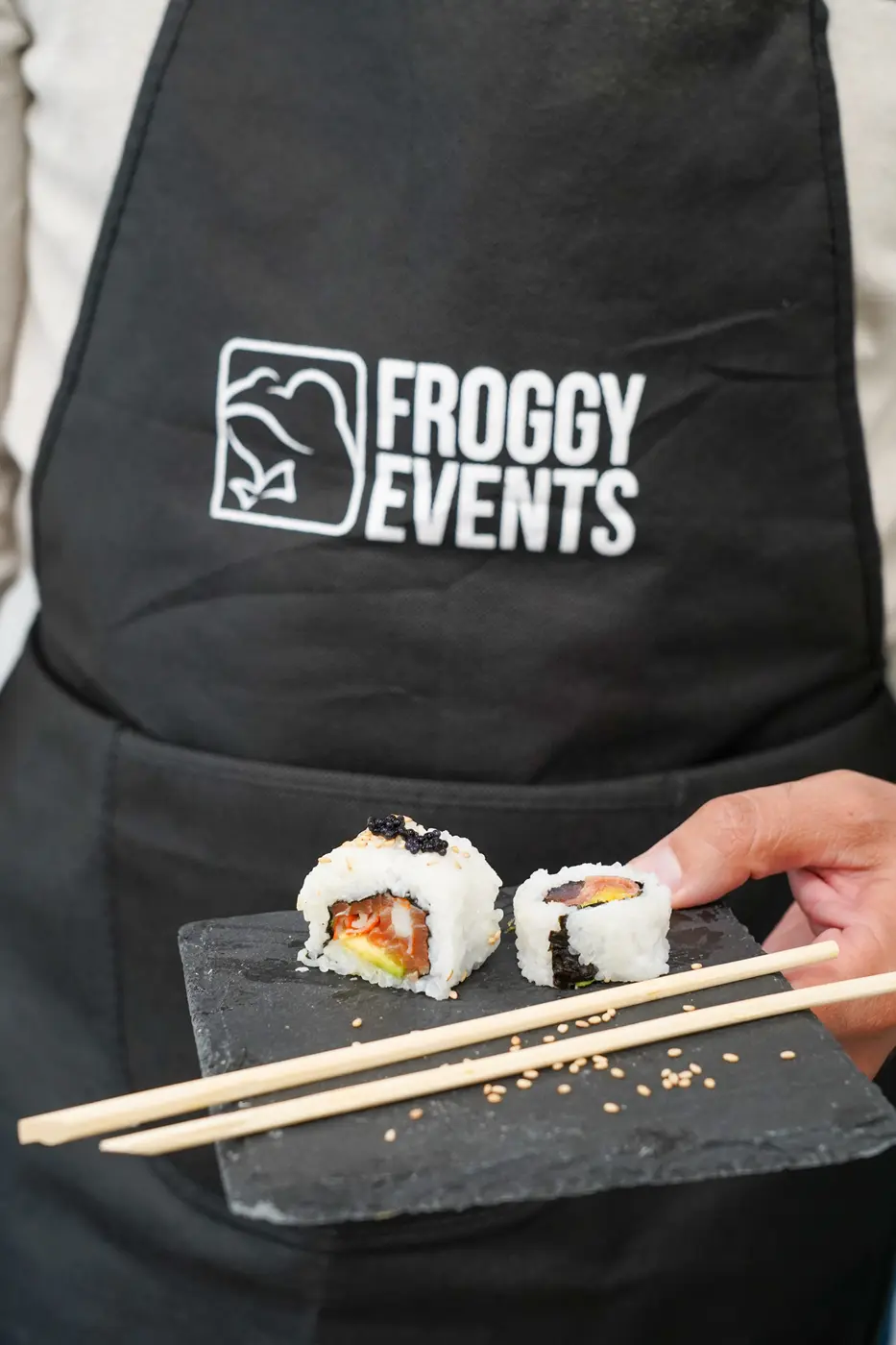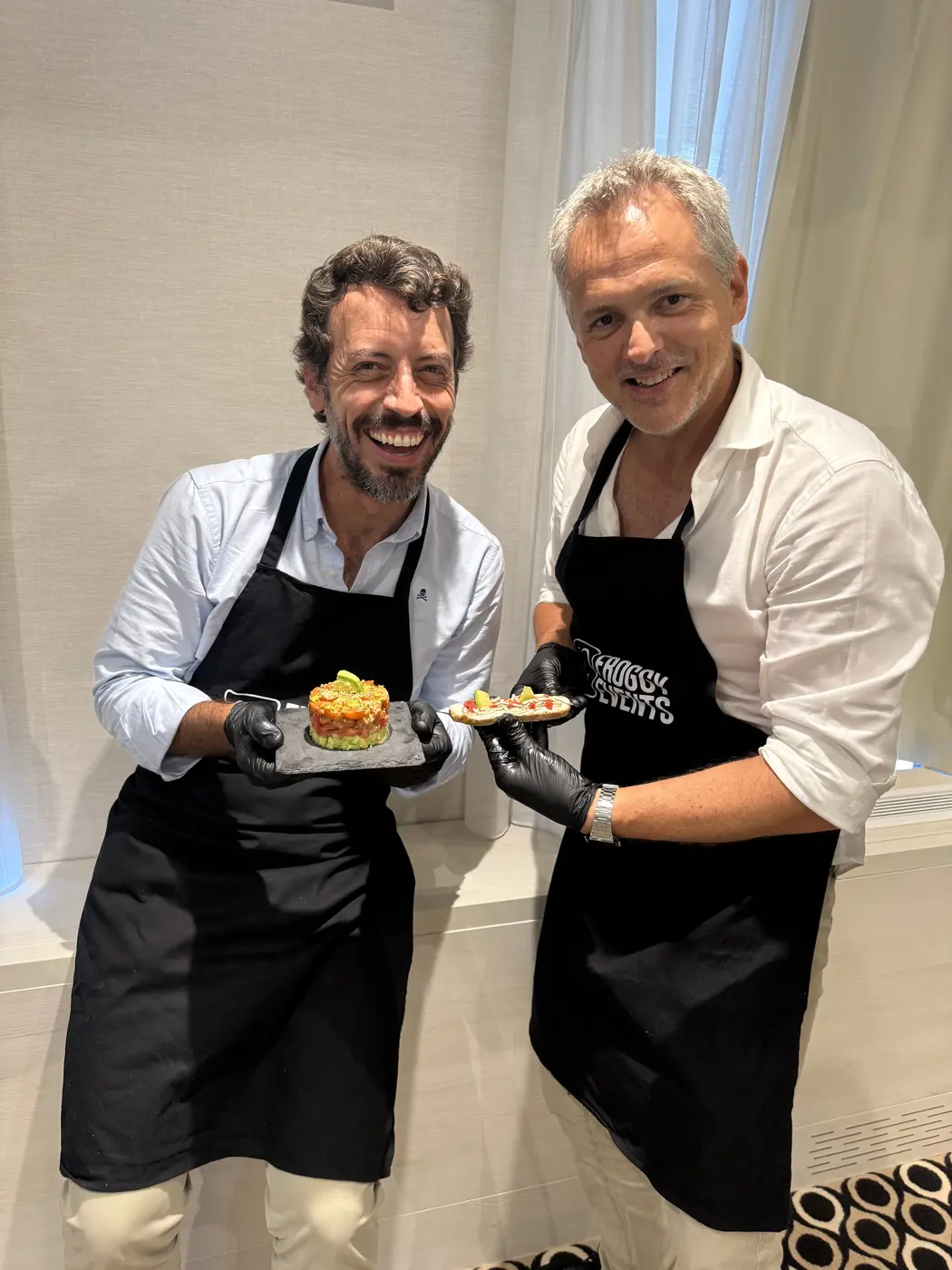
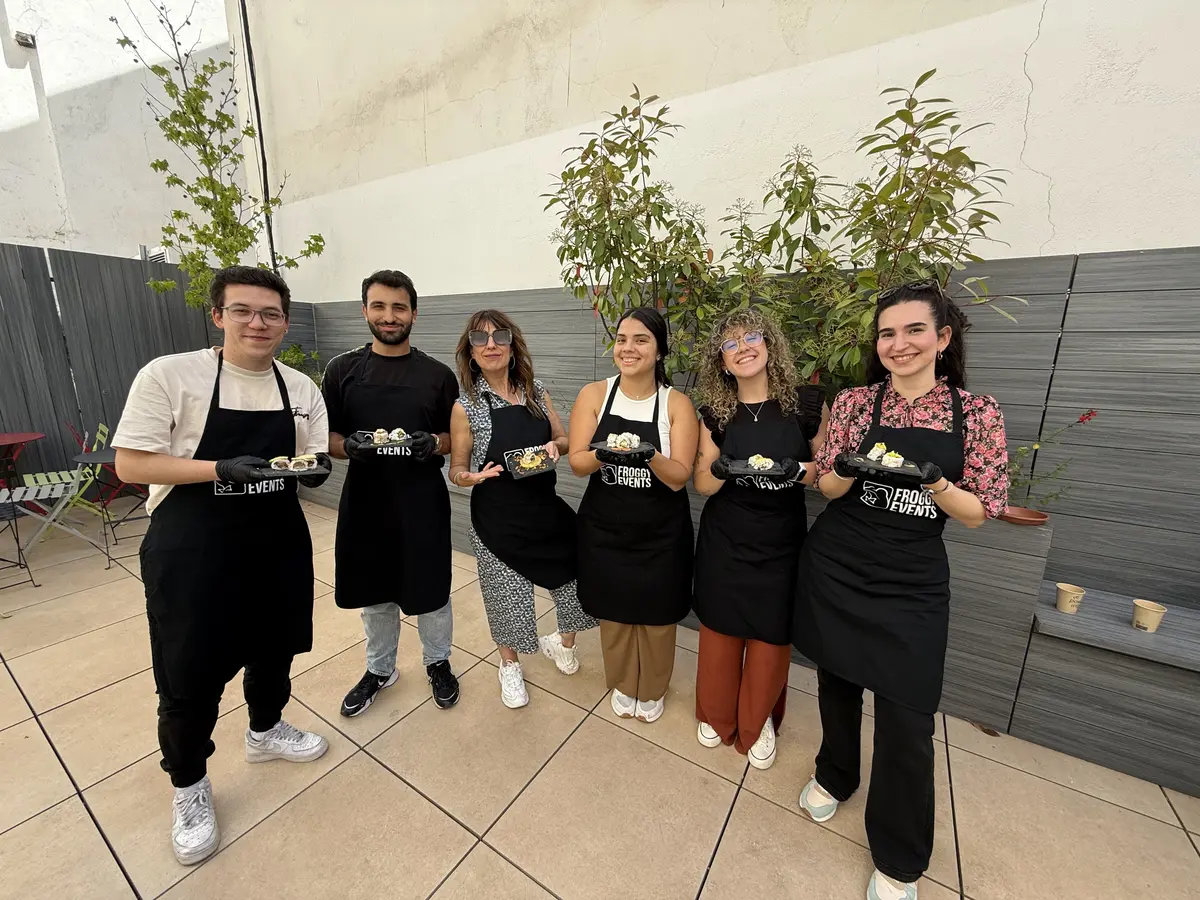
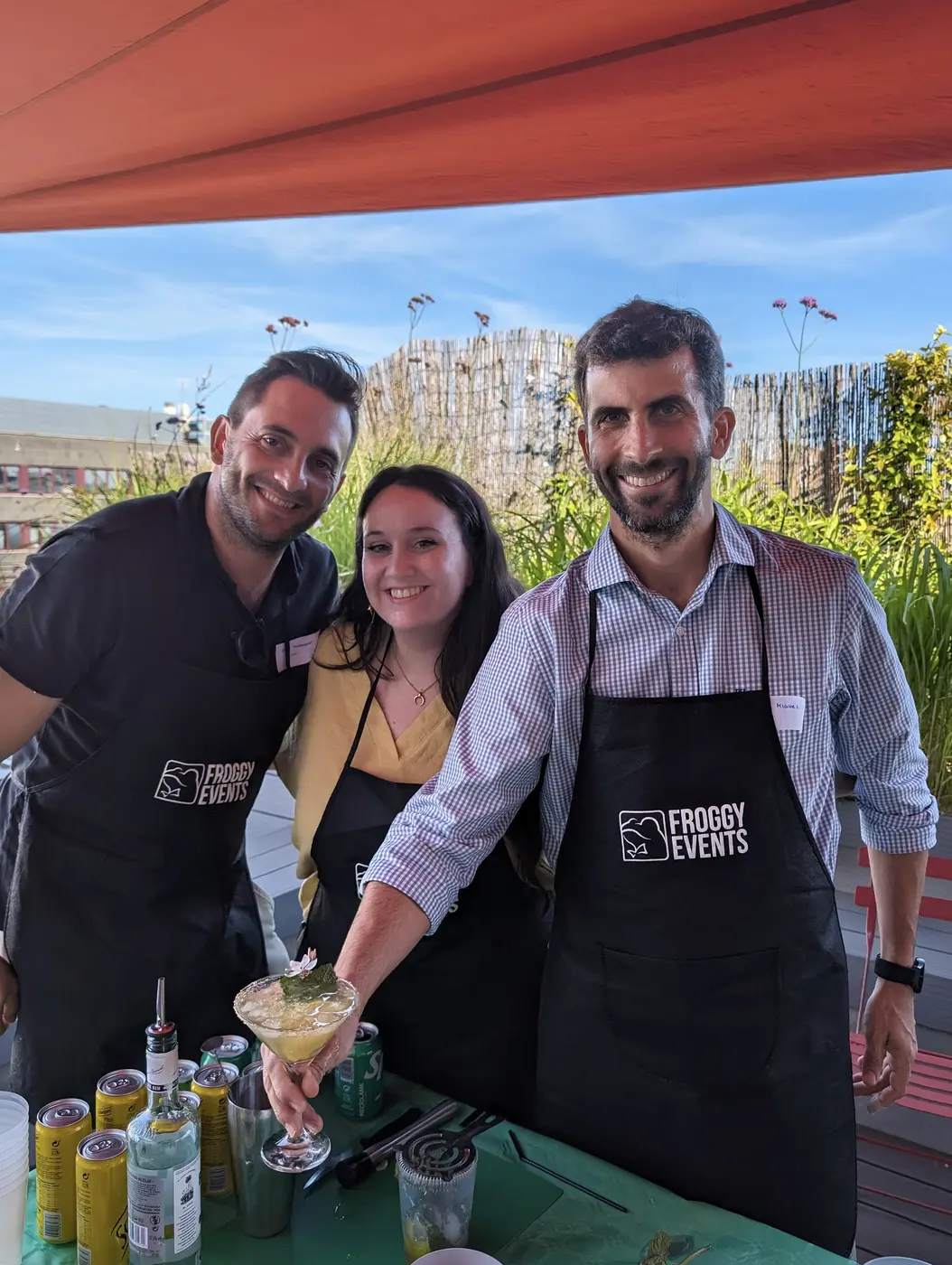
There is a reason why food team building activities for companies are the most in-demand category year after year, and it is not only the obvious appeal of eating well. It is that cooking, sushi and cocktail-making are the only three formats where the office hierarchy literally disappears within five minutes. The director who never improvises starts mixing ingredients on instinct. The most reserved person on the team turns out to be the one who plates the dish best. Anyone who would have got bored in any meeting-room dynamic comes alive with a knife and a board.
This natural levelling is what makes gastronomic team building the safest pick for heterogeneous groups: cross-department teams, client days, kick-offs with mixed profiles, integrations after a merger. Everyone eats. Everyone enjoys. Nobody is left out for not knowing, not wanting to compete or not getting along with the sport of the day.
The second, less obvious reason is that the team's work output is edible. There is a huge difference between pitching a dish the jury will taste and completing an abstract team building task whose result nobody will touch the next day. Tangibility closes the experience loop and creates that "we did this together" that meeting-room dynamics never replicate. The three formats share that logic: judges scoring round by round, a final trophy, real tension.
The third reason is practical: a corporate gastronomic event solves both the activity and the meal at once. No need to plan a team building in the morning and a restaurant in the afternoon. The activity IS the meal, which opens up logistical options no other category allows — and that explains why more and more companies choose it to replace the company dinners of old.