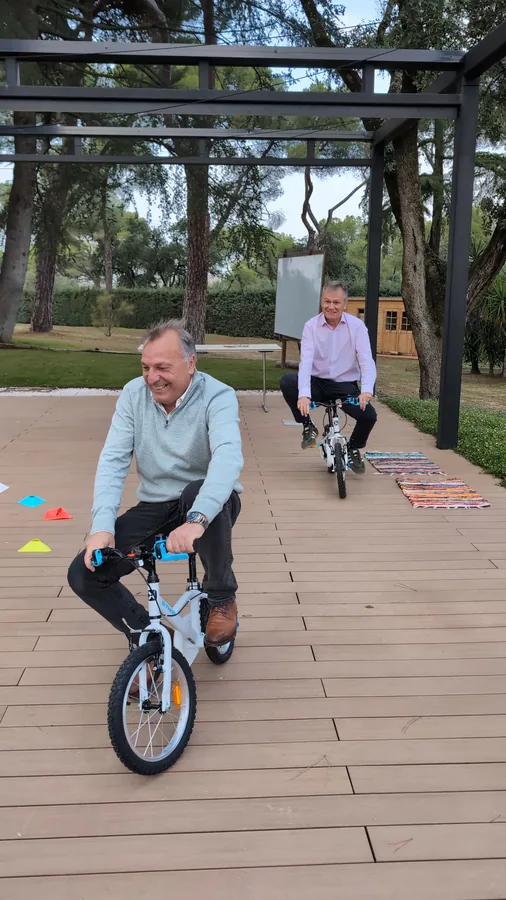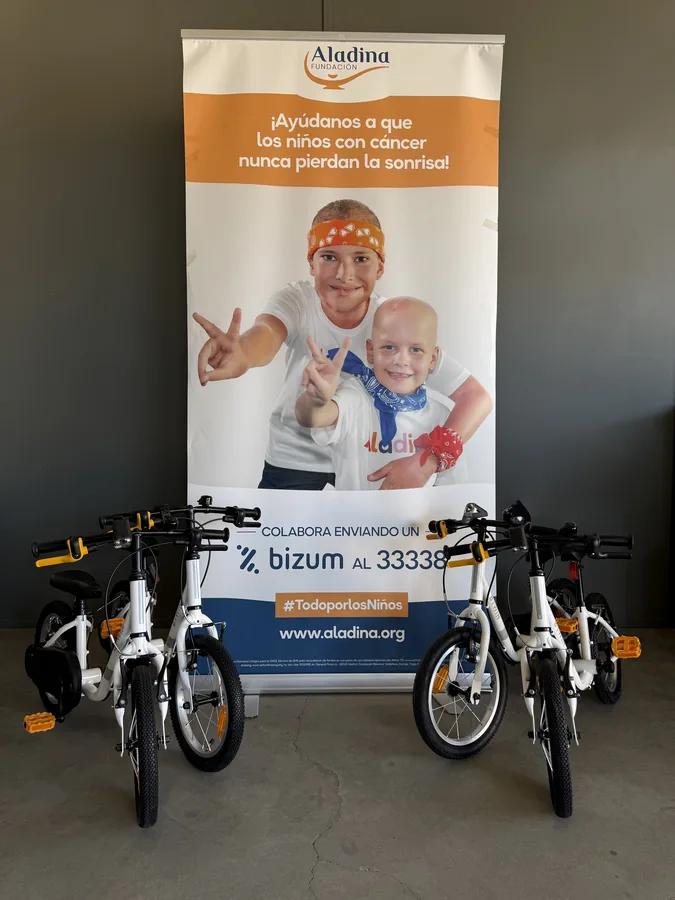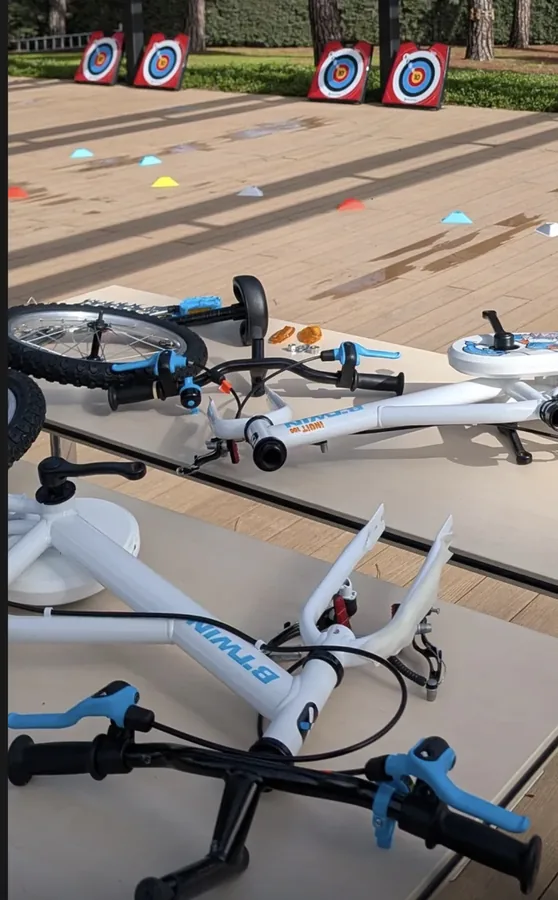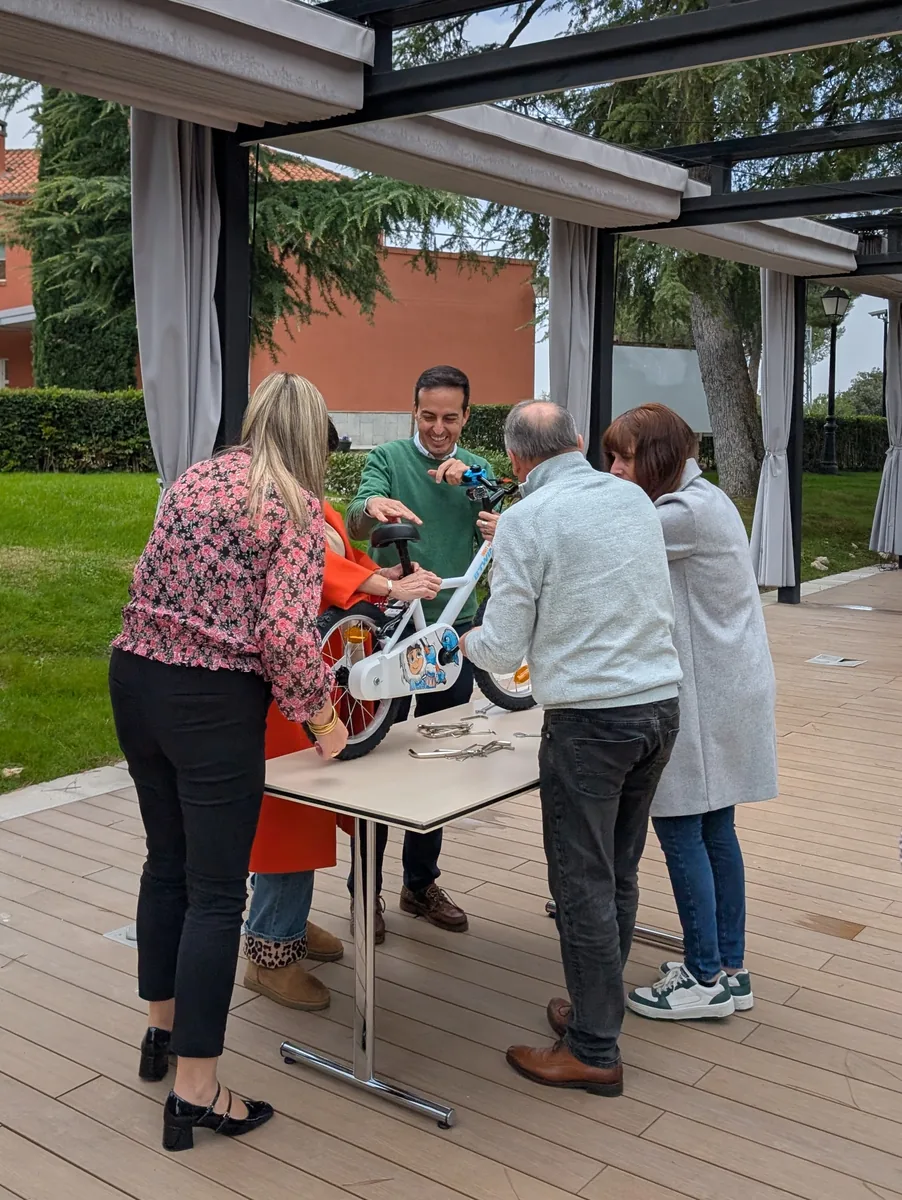
Bikes with a Future (Spanish: Bicis con Futuro) is our flagship charity team building in Madrid: an experience for companies that combines fun, teamwork and real purpose. The activity is split in two parts: a competitive station-based gymkhana and the collaborative assembly of children's bikes donated to kids who need them. Available in central Madrid, the entire Madrid region, and the rest of Spain.
In the gymkhana, teams rotate through stations tackling challenges of cooperation, communication and strategy. Every challenge they complete adds points to the scoreboard. The second part is the bike assembly: here cooperation isn't optional, because without internal organisation the bike simply won't come together.
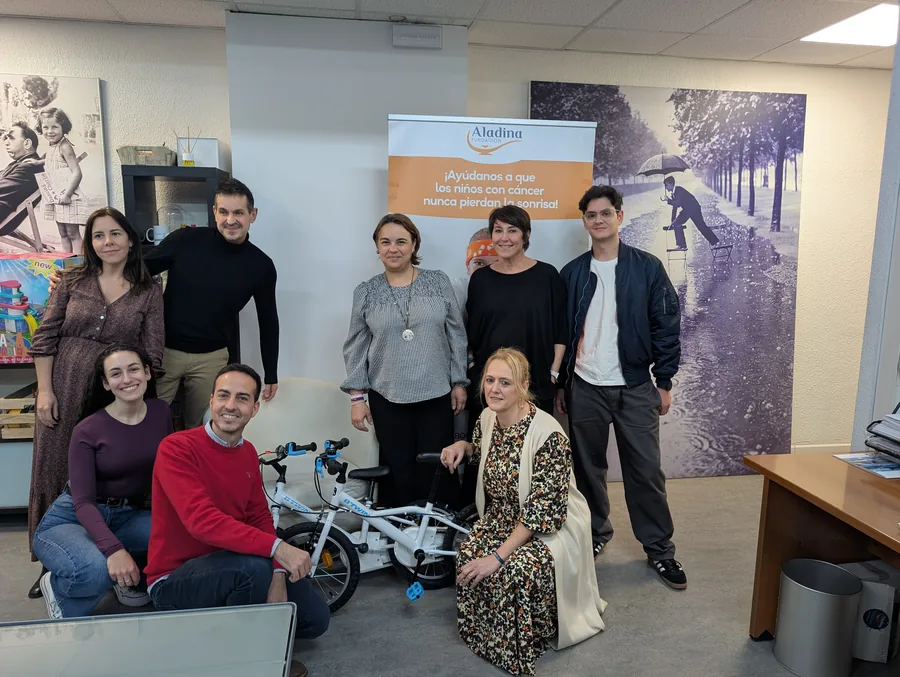
When everything is finished, the bikes are reviewed by a team of experts to ensure they're in perfect working order. And then comes the moment nobody forgets: the donation to the NGO chosen by the team or the company.